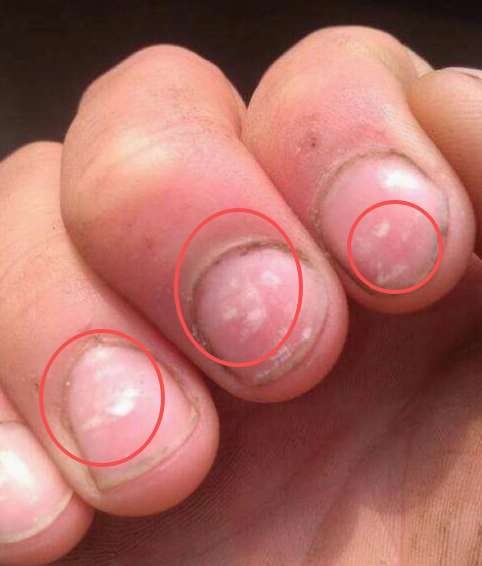
DID YOU KNOW that if your nails have white spots, it’s because your body is…see more
You’re clipping your nails or putting on polish when you notice them: tiny, bright white dots or streaks against the pink background of your nail. For ages, people have passed around the myth that these are “lie spots” or signs that someone hasn’t told the truth. It’s a cute idea—but your body is giving you a much simpler, far more realistic message.






If you see white spots on your nails, it has nothing to do with lying. In nearly all cases, it’s your body showing you evidence of a small, often forgotten injury to the base of your nail. That little mark is simply the nail’s record of that minor trauma.
The medical name for this is leukonychia.

The Truth: A Tiny Injury, Not a Nutrient Problem
The part of your nail you can see is made of hardened, dead cells. But the nail actually begins at the matrix—the living tissue hidden under the cuticle. Think of it as the nail’s “production center.” When this delicate matrix gets bumped, squeezed, or pinched—sometimes so lightly you don’t even remember—the process of forming new nail cells gets disrupted for a moment.
That brief interruption creates a tiny air pocket or flaw in the nail plate. As the nail grows, the flaw moves upward. What you’re seeing is simply that little imperfection. It’s basically a nail bruise.
Why So Many People Think It’s a Calcium Issue
A widespread belief says white spots mean you’re low on calcium. While calcium is essential for bone strength, it doesn’t play a major role in nail appearance. Nails are mostly made of keratin, a protein. If someone is severely protein deficient, their nails can show changes—but that typically appears as deep horizontal grooves (Beau’s lines), not isolated white dots.
When It Might Mean Something More (Very Rarely)
Although almost all white spots are caused by small injuries, there are uncommon situations when a pattern of leukonychia can hint at an underlying issue. You may want to talk to a doctor if your white spots are:
Accompanied by horizontal bands: This may reflect a previous period of major stress or illness that temporarily halted nail growth.
Covering the entire nail: Extremely rare, but can sometimes be linked to serious liver or kidney conditions.
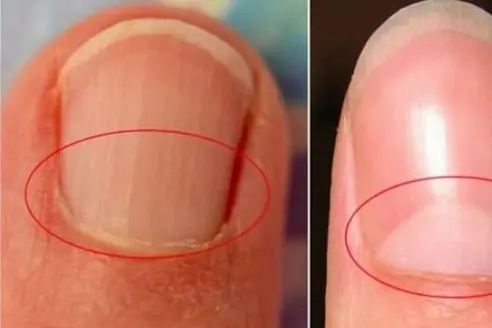
Appearing as paired white lines: Called Muehrcke’s lines, which can occasionally signal low protein levels.
For the typical, isolated white spot, your body isn’t sounding an alarm—it’s simply showing you the trace of a small, unnoticed injury: shutting a drawer too quickly, being rough with your manicure tools, or a kid tugging your finger during play. The only “treatment” you need is time. The spot will naturally grow out and disappear, a subtle reminder that your body keeps quiet records of all the little bumps and knocks of daily life.