Beyond the Textbook: 7 Secret Superpowers and Strange Quirks Found in Only a Tiny Fraction of Humanity






The Unfinished Map: Our Bodies Are Still Full of Secrets
Even with all the incredible advances in science and medicine—from mapping the genome to microscopic surgery—the human body remains the last great frontier. We are still uncovering its secrets, sometimes in the most unexpected places.
Take, for instance, the recently discovered, previously unknown salivary-producing organs found hidden deep in the head. These findings are powerful reminders of just how unique, mysterious, and complex our biological structures truly are.
Every human being is an astonishing collection of genetic blueprints, but for a rare few, the blueprint contains an extra detail—a strange quirk, a subtle anomaly, or even what could be described as a mild superpower.
These unusual features appear in only a tiny percentage of the population, proving that every body is indeed one-of-a-kind. Here is a look at some of the most fascinating and unusual traits found only in a fraction of humanity.
1. The Genetic Safety Lock: Unbreakable Bones
Imagine surviving a severe car accident without a single fracture. This is the reality for a tiny fraction of people who possess an incredibly rare genetic mutation known as LRP5.
This condition causes the bones to be exceptionally dense and strong. The mutation first drew widespread scientific attention in 1994 when a man involved in a serious crash walked away completely unscathed.
Individuals with this variation of the LRP5 gene not only have bones that can withstand far greater force than the average person, but their bodies also regenerate bone minerals more efficiently. This gives them an almost preternatural resilience to injury and a lifelong defense against conditions like osteoporosis. It’s the closest thing to having a biological safety lock built right into your skeleton.
2. Seeing the Unseen: The World of Tetrachromacy
Most of us see the world through what is called trichromatic vision, relying on three types of color receptors in our eyes: red, green, and blue. This allows us to perceive millions of distinct colors.
But a rare group of people—known as tetrachromats—possesses a fourth color receptor.
This genetic difference grants them the ability to see millions of additional color variations that others simply cannot perceive. Their experience of the world is exponentially richer in hue and subtlety. This rare trait is far more common in women, with scientists estimating that up to 12% of women may possess the potential for this tetrachromatic vision. They literally inhabit a more colorful dimension than the rest of us.

3. The Taste Amplifier: The Supertaster Phenomenon
Have you ever wondered why certain people hate the taste of broccoli or find coffee unbearably bitter, while others enjoy those exact same flavors? The answer might be an extra helping of taste buds.
Individuals born with extra taste buds are referred to as supertasters. They detect flavors—especially bitter ones—with an intensity that is far greater than the average person.
For supertasters, common foods like broccoli, dark chocolate, coffee, and grapefruit may taste shockingly strong, acidic, or bitter. Approximately 25% of the population falls into this category, and interestingly, women are more likely than men to have this heightened sensory ability. Their world of food is one of amplified pleasure and intense aversion.
4. The Fishy Scent: The Riddle of Trimethylaminuria
While body odor is a common human experience, a rare condition known as trimethylaminuria (TMAU) causes a persistent, potent odor that is almost impossible to mask. Only about 100 documented cases exist globally, making it one of the rarest conditions on this list.
The body naturally produces a chemical called trimethylamine (TMA)—which is known for its strong, distinct, fishy smell. Most people break down this chemical through normal metabolism. However, those with TMAU lack the necessary enzyme to process it, leading the intense, offensive odor to be released through their sweat, breath, and urine. This is a condition that, while physically harmless, carries a massive emotional and social toll.
5. The Vestigial Feature: A Small Hole Near the Ear
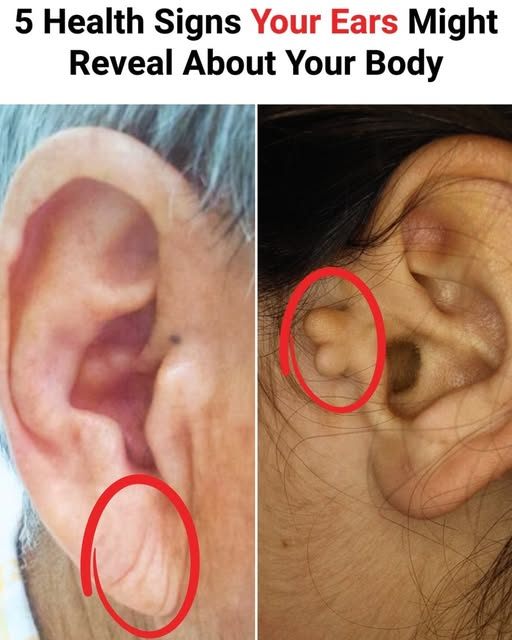
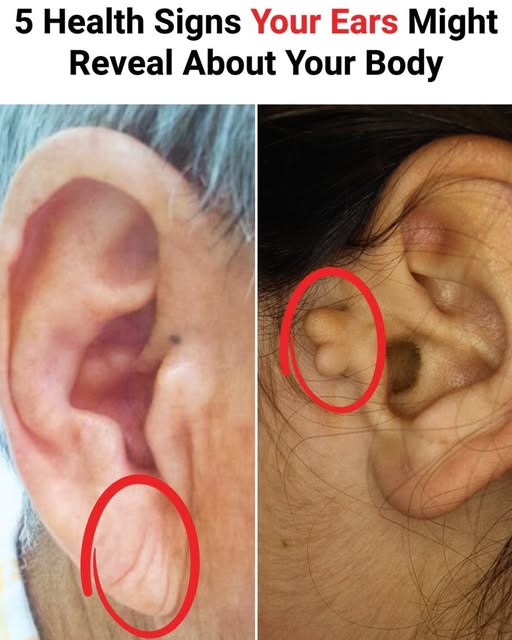
Some people are born with a tiny, subtle hole located near the front of the ear, where the cartilage of the ear meets the face. This minor anatomical difference is known as a preauricular pit.
It can appear on one or both ears, though it is often found unilaterally. Medically, it is classified as a congenital defect resulting from the incomplete fusion of the ear arches during embryonic development. Thankfully, it is usually harmless and rarely causes health problems, though it can occasionally become infected and require removal. It is a small, quiet vestige of our evolutionary past.
6. The Missing Defense: Fingers and Toes Without Nails
It may be hard to imagine performing everyday tasks without the support and protection of fingernails or toenails, but for people born with anonychia congenita, this is normal.
This rare genetic condition results in the complete absence of nails at birth. It can affect all twenty nails or only a few. Despite its unusual appearance and the mild functional inconvenience it causes, it typically does not impact a person’s overall health. It is a stunning example of how a single gene can radically alter a standard human feature.
7. The Myth Made Real: Excessive Hair Growth (Hypertrichosis)
Although we often associate “werewolves” with myth and fantasy, the condition known as hypertrichosis—often nicknamed “werewolf syndrome”—is very real. It causes excessive hair growth all over the body, often covering the face, limbs, and trunk with thick, dark hair.
This condition is exceptionally rare, with only about 50 cases ever recorded. The exact genetic cause isn’t fully understood, but it often runs in families and can be present at birth or develop later in life. It is a dramatic, visible reminder of the vast, varied potential of human genetics.
The human body is an ever-evolving miracle of complexity. These rare features—from enhanced vision and unbreakable bones to the small, subtle vestiges of development—underscore an essential truth: our biology is not a fixed, rigid code. It is a living, changing language, constantly surprising us and proving that every human body is a distinct, beautiful mystery waiting to be explored.