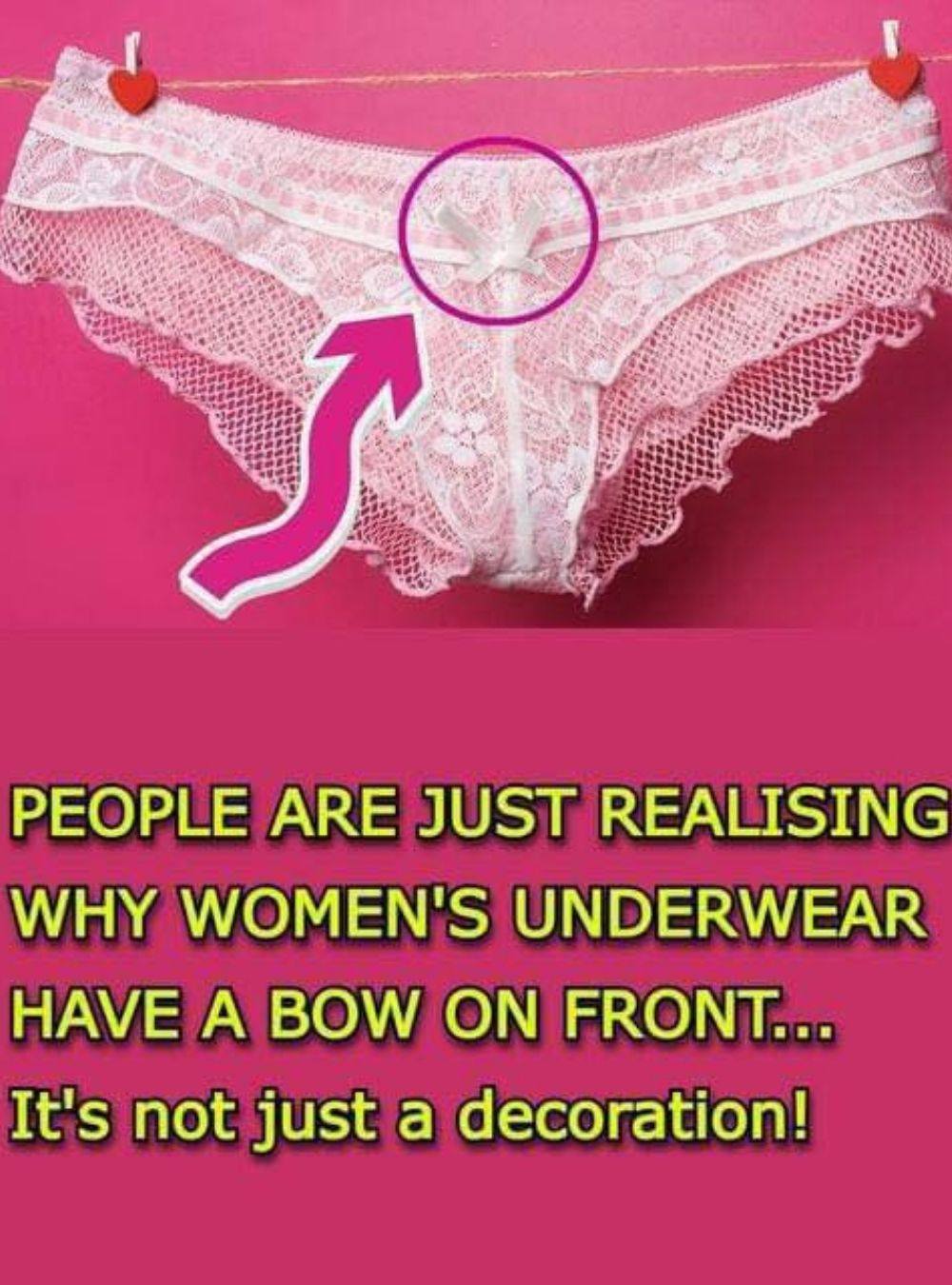

If you’ve ever noticed a small satin bow stitched to the front waistband of certain garments—particularly underwear or lightweight sleepwear—you’re not alone in wondering why it’s there. To many, it appears to be nothing more than a cute decorative detail, a simple flourish added for aesthetic appeal. But surprisingly, that tiny bow carries a long history and originally served a very practical purpose.


Before the convenience of elastic waistbands became standard, garments were often held in place with a drawstring threaded through a narrow channel at the top. The ends of the ribbon needed to be tied to secure the garment, and naturally, people tied the bow at the front. Not only was this position the most accessible, but it also made dressing considerably easier at a time when households did not have the luxury of bright indoor lighting.
Imagine dressing in the early morning by candlelight or before dawn in a dim room—turning a garment around in your hands, trying to identify the correct orientation, would have been more complicated than it is today. That front-tied ribbon solved the problem: it told the wearer instantly which side was the front and allowed the garment to be tightened without needing to reach awkwardly behind the back.
As clothing design evolved and elastic became the dominant method for securing waistlines, the functional ribbon was no longer necessary. Yet clothing manufacturers continued to include the bow—first out of habit, then as a comforting design element that consumers had come to expect. What was once a functional fastening became a stylistic signature. The bow remained as a small visual cue that continued to help wearers identify the front of a garment at a glance.
Even today, this tiny detail has not lost its usefulness. Many people get dressed quickly in low light—whether waking up early, dressing children before school, or navigating a dark bedroom while a partner sleeps. The bow offers a subtle tactile guide so the garment can be oriented correctly without guesswork. It also provides a neat finishing touch that softens the overall appearance, blending practicality with a hint of charm.
Beyond its modern function, the bow also serves as a quiet symbol of the garment’s history. It connects contemporary clothing to centuries-old practices, reminding us that even the simplest everyday items come from a long tradition of problem-solving and craftsmanship. What began as a utilitarian ribbon designed for convenience has become a design classic that persists in lingerie and sleepwear around the world.
In essence, that tiny bow is more than decoration. It’s a survivor of fashion’s evolution—part practical guide, part nostalgic nod to the past, and part aesthetic detail that continues to delight and assist without most people ever realizing why it exists.